Casement Window Hardware Repair
Updated: Aug 9

A casement window that rubs against the frame, has a handle that is difficult to operate, or no longer seals properly doesn't necessarily need to be replaced. Casement window hardware repair can often restore smooth operation, improve weather sealing, and extend the life of the window at a fraction of the cost of a new one. The key is to address the problem before worn hinges or a failing mechanism begin damaging the sash, weatherstripping, or insulated glass.
Signs That Your Window Hardware Needs Repair
The first signs are often subtle. The window requires a little more effort to open, then begins rubbing when you close it. Over time, the sash may start to sag slightly and scrape against the bottom or side of the frame. A handle that's difficult to turn, a lock that no longer engages properly, or noisy hinges are all warning signs that shouldn't be ignored.
Sometimes the symptoms appear before the hardware itself is noticed. Drafts around the window, excessive condensation near the inside frame, or water leaks during heavy rain may all result from a window that no longer compresses the weatherstripping properly. In climates with significant seasonal temperature changes, allowing the problem to continue can reduce comfort and increase heat loss.
A window may also appear to be locked even though the sash is no longer perfectly aligned. This uneven alignment creates inconsistent pressure on the weatherstripping, allowing air to enter and, during driving rain, creating a path for water infiltration.
What Is Checked During a Casement Window Hardware Repair?
An effective repair involves much more than tightening a few screws. The first step is determining whether the problem actually lies with the hardware, the sash adjustment, or the overall condition of the window. An accurate diagnosis prevents unnecessary part replacements while ensuring larger issues aren't overlooked.
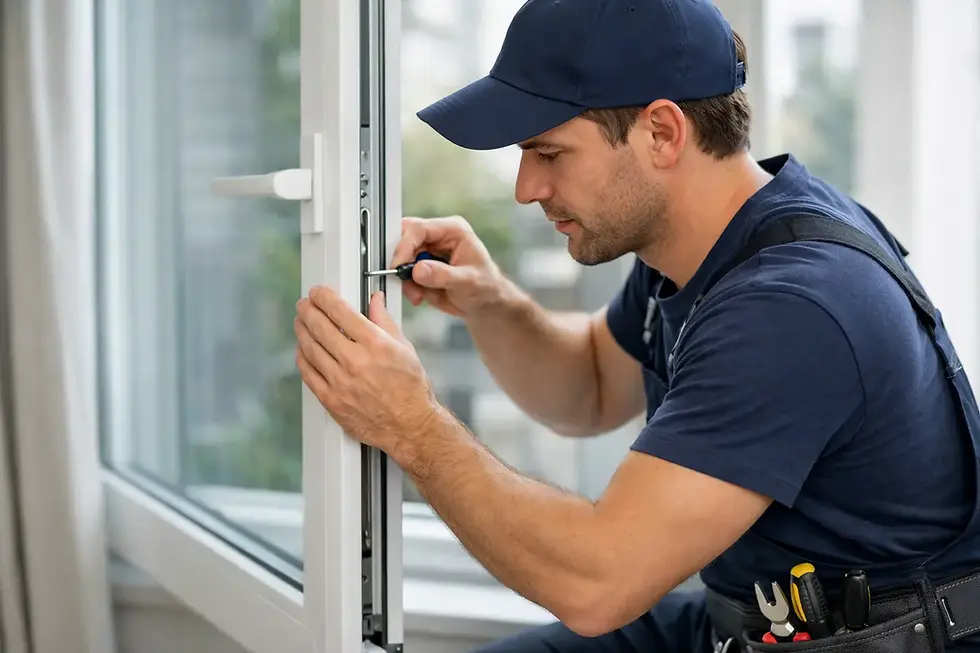
The hinges are inspected for wear, proper attachment, and alignment. On some windows, screws gradually loosen in the wood, PVC, or aluminum frame. As a result, the sash develops play and its weight is no longer properly supported. If the hinges remain in good condition, proper adjustment and secure fastening may solve the problem. When hinges are worn, cracked, or rusted, replacement is usually the most reliable long-term solution.
The handle, operating arm, and locking mechanism also require careful inspection. A mechanism that sticks may be caused by worn internal components, dirt buildup, or poor alignment between the latch and strike plate. Forcing the handle can damage the mechanism further or cause additional misalignment. In many cases, adjusting the sash and replacing the defective component restores smooth, secure operation.
The window frame itself should also be evaluated. A frame that has shifted slightly or lost structural support can produce the same symptoms even after new hinges have been installed. That's why the repair must consider the entire window system, including the sash, frame, hardware, weatherstripping, and locking mechanism.
The Importance of Weatherstripping
The hardware provides the pressure needed to close the window securely, but the weatherstripping is what actually seals out air and moisture. When a window doesn't close properly, the weatherstripping may become compressed, torn, or hardened over time. Repairing the hardware without inspecting the weatherstripping often results in only a partial solution.
Likewise, installing new weatherstripping won't compensate for a window that remains out of alignment. The sash must close in the correct position for the seal to perform properly. This combination of proper adjustment, hardware repair, and weatherstripping replacement is often the key to restoring excellent weather protection without replacing the entire window.
Can Every Casement Window Be Repaired?
In many cases, yes. A casement window is usually a good candidate for repair when the frame remains solid, the sash is not significantly warped, and the insulated glass is still in good condition. Worn hinges, a broken handle, a poorly adjusted lock, or aging weatherstripping are all localized problems that can usually be repaired without replacing the entire window.
The situation is different when the frame has rotted, significant structural water damage is present, or the window has lost its overall stability. Even a fogged insulated glass unit doesn't automatically require a new window. In many cases, only the insulated glass unit can be replaced while keeping the existing frame and sash, provided they remain structurally sound. The best solution depends on the actual condition of each component—not simply the age of the window.
Parts availability may also influence the repair. Some older window models use hardware that is no longer manufactured. In those situations, a specialist may recommend compatible replacement parts, modify the mounting system, or suggest a more extensive repair. The goal remains the same: preserve what still works, replace only what is necessary, and avoid unnecessary expense.
Why You Should Repair the Problem Early
Failing window hardware places additional stress on the rest of the window. As the sash begins to sag, it can prematurely wear the weatherstripping, scratch the frame, and place unnecessary stress on the insulated glass. A handle that must be forced may eventually break, making the window difficult to close or secure.
Prompt repairs also help maintain your home's comfort. A properly sealed window reduces cold drafts during winter and prevents warm, humid air from entering during summer. On wind-exposed sides of the home, the improvement can often be noticed immediately once the window has been properly adjusted.
Complete window replacement is sometimes necessary, but it shouldn't be the automatic solution. When the structure remains sound, restoring existing components reduces waste, preserves the appearance of your home, and allows your budget to focus on the actual problem. This is often the most economical and environmentally responsible approach, especially for homeowners who want to preserve older windows that still match the character of their home.
What You Should Avoid Doing Yourself
Applying a small amount of lubricant to an accessible moving part may temporarily reduce squeaking, but it won't correct a bent hinge or a misaligned sash. Heavy oils and grease can also attract dust and interfere with the proper operation of certain mechanisms. Avoid applying multiple lubricants unless you know exactly which type of hardware your window uses.
Likewise, don't force a handle or a window that won't move freely. Doing so can break the locking mechanism, pull out mounting screws, or crack PVC components. You should also avoid drilling new mounting holes or relocating hardware without understanding the adjustment system, as improper modifications can make alignment even more difficult.
A professional inspection is especially recommended if you notice water leaks, excessive movement in the sash, visible corrosion, or difficulty locking the window. These symptoms often indicate a problem that extends beyond a simple adjustment.
A Repair That Fits Both Your Window and Your Budget
For homeowners in Laval, Montreal, Terrebonne, Mascouche, Repentigny, and throughout the North Shore, targeted repairs often restore a casement window without the need for complete replacement. A qualified technician should clearly explain what can be repaired, what should be replaced, and what can reasonably wait. That transparency allows you to make an informed, cost-effective decision.
At MMC Portes et Fenêtres, we believe in repairing windows whenever it provides the most durable and economical solution. By carefully inspecting the window, correcting the source of the problem, and preserving components that still perform well, we help homeowners extend the life of their existing windows. Comparing the cost of hardware repair, weatherstripping replacement, or insulated glass replacement with the cost of a new window often reveals that repair is the smarter investment. Discover our window repair services.
A window that closes properly may not seem remarkable, but it makes everyday life noticeably more comfortable. It opens more easily, seals out drafts, and better protects your home. At the first signs of looseness or difficulty operating the window, having the hardware inspected is often the simplest way to extend its life for many years.
Need Help?
Is your casement window difficult to open, close, or lock properly?
At MMC Portes etFenêtres, we'll inspect your window hardware, identify the source of the problem, and recommend the most cost-effective solution. Whenever possible, we repair the existing hardware before recommending a complete window replacement.
Contact us today to request your free estimate.


Comments