What Causes Air Leaks Around Windows?
Updated: Aug 9

Do you feel a draft around a window even when it's closed? The causes of air leaks around windows aren't always obvious. Something as simple as worn weatherstripping, a window that doesn't close properly, or a slightly misaligned frame can allow cold air to enter your home, increase heat loss, and make a room less comfortable.
Before assuming the entire window needs to be replaced, it's important to identify the actual source of the problem. In many cases, a targeted repair can restore a proper seal, extend the life of the window, and help you avoid unnecessary replacement costs.
Why Air Leaks Should Be Addressed Quickly
In Quebec, even a small air leak becomes much more noticeable when temperatures drop. Feeling cold near a window is uncomfortable, but it's only part of the problem. Air leaking through a window reduces comfort, forces your heating system to work harder, and can contribute to condensation on cold surfaces.
Air leaks also tend to worsen over time. Weatherstripping that begins to harden may initially allow only a slight draft. After repeated freeze-thaw cycles, movement in the frame or operating hardware can make the problem worse. Addressing the issue early is usually simpler and less expensive than waiting until the window becomes difficult to close or moisture damage develops around the opening.
It's also important to distinguish between a true air leak and the natural feeling of a cold glass surface. An insulated glass unit that feels cold to the touch doesn't necessarily mean air is leaking. However, noticeable moving air, a whistling sound, or curtains moving around the edges of a closed window are strong signs that should be investigated.
The Most Common Causes of Air Leaks Around Windows
Worn, Compressed, or Damaged Weatherstripping
Weatherstripping creates the seal between the operable window sash and the frame. Over time, it can become flattened, cracked, detached, or lose its flexibility. This is one of the most common causes of drafts, particularly on windows that are opened frequently, exposed to direct sunlight, or subjected to significant temperature changes.
The problem may affect only one corner or the entire perimeter of the window. Even if the weatherstrip appears to be in place, it may no longer provide an effective seal if it doesn't spring back when the window is closed. Replacing it with the correct profile and thickness can make an immediate difference.
A Window That Doesn't Close Tightly Enough
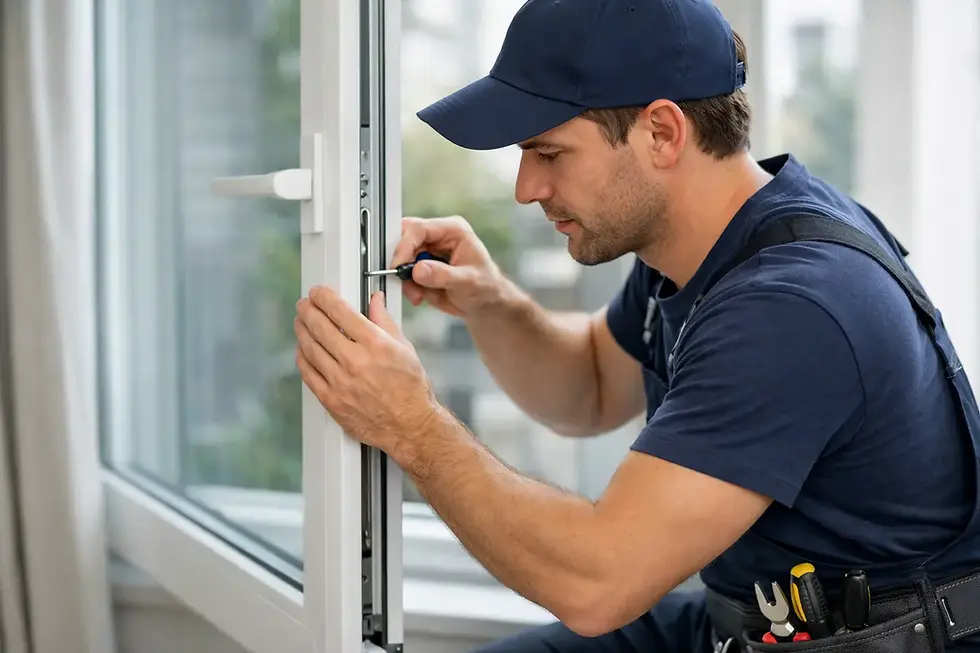
A window should close evenly against its weatherstripping. If the handle is difficult to operate, the lock doesn't engage properly, or one side closes tighter than the other, the problem may be caused by worn hardware, hinges, operating mechanisms, or improper adjustment.
This situation is common with casement windows, crank-operated windows, and some sliding windows. A slightly worn or misadjusted component may prevent the sash from pressing firmly against the weatherstripping. The window appears to be closed, but the seal is incomplete. Adjusting or repairing the hardware often solves the problem without major work.
A Misaligned Frame or Window Sash
Building materials naturally expand and contract with seasonal changes, and the structure itself may settle slightly over time. These normal movements can gradually create misalignment between the frame and the operable portion of the window.
Typical signs include uneven gaps around the sash, rubbing during operation, difficulty closing the window, or a lock that no longer lines up properly. In these situations, replacing the weatherstripping alone may not solve the problem. The window should first be properly aligned, and the closing pressure verified before replacing the seals if necessary.
Cracked or Deteriorated Exterior Sealant
Exterior sealant around a window serves a different purpose than the interior weatherstripping. It helps prevent air and water from entering the joints between the window frame and the building's exterior wall. Over time, exterior sealant can crack, shrink, or separate from the surrounding materials.
These defects may allow drafts, particularly during strong winds. They should be inspected carefully because they may also create a path for moisture intrusion. Proper repair involves removing failed sealant, preparing the surface correctly, and applying new sealant—not simply adding more over the old material.
Worn or Damaged Window Hardware
Window hardware does much more than open and close the window. It also helps keep the sash properly positioned and compresses the weatherstripping when the window is locked. A crank that spins freely, a bent operator arm, a weak lock, or damaged hardware can all contribute directly to air leakage.
Avoid forcing the window. Excessive force can further damage the mechanism, bend components, or worsen alignment problems. A professional repair can restore or replace the necessary hardware while preserving the existing window whenever possible.
A Failed Insulated Glass Unit—Without an Air Leak
Fogging between the panes of an insulated glass unit indicates that the perimeter seal has failed. This affects the window's insulating performance and clarity, but it doesn't automatically mean outside air is entering your home. It's important not to confuse these two separate issues.
That said, a window may have multiple problems at once, including failed insulated glass, worn weatherstripping, and poor closing pressure. A complete inspection identifies which components should be repaired to restore the window's overall performance.
How to Find Where Air Is Entering
Start by inspecting the window on a cold or windy day. Slowly move your hand around the sides, top, bottom, and corners of the frame without touching the glass itself. Watch for these signs:
Frost or excessive condensation around the frame.
A whistling sound when the wind blows.
Curtains moving even though the window is closed.
A window that closes unevenly or requires excessive force.
A simple paper test can also help. Place a thin sheet of paper between the window and the frame, then close and lock the window. If the paper slides out easily in certain areas, the weatherstripping isn't being compressed properly. While this test is helpful, it doesn't replace a complete inspection of the weatherstripping, hardware, and window adjustment.
Avoid temporary fixes that block drainage openings built into certain window frames. Likewise, applying tape or interior sealants may hide the symptoms without correcting the actual problem while making future maintenance more difficult.
Which Repair Is Right for Your Window?
There is no single solution for every air leak. If the weatherstripping is worn but the window remains properly aligned, replacing the weatherstripping is usually the best option. If the locking mechanism no longer pulls the sash tightly against the frame, adjusting or replacing the hardware may solve the issue.
When air enters around the exterior of the window, the condition of the exterior sealant and surrounding materials should be inspected. If the insulated glass is fogged, replacing the insulated glass unit can improve both appearance and energy efficiency, but the operating hardware and weatherstripping should also be evaluated.
Repair is often the most practical solution when the frame remains structurally sound, the window operates properly after adjustment, and the problem is limited to replaceable components. This approach minimizes unnecessary work, reduces waste, and addresses the actual source of the discomfort.
When Should You Call a Professional?
A professional inspection is recommended if several windows have drafts, if you notice moisture around the frames, or if the operating mechanisms no longer close properly. It's also a good idea if you've already replaced the weatherstripping without seeing any improvement, as the problem may lie with the alignment or hardware instead.
For homeowners in Laval, Montreal, Terrebonne, Mascouche, Repentigny, and throughout the North Shore, MMC Portes et Fenêtres can evaluate the condition of your windows and recommend the most appropriate repair. Our approach focuses on extending the life of existing windows whenever possible. A quality repair doesn't simply hide a draft—it restores the window's ability to seal properly, insulate effectively, and operate as intended. Discover our weatherstripping replacement services.
A draft is never something to ignore. By identifying the actual cause instead of relying on temporary fixes, you improve your home's comfort while helping your windows continue to perform reliably for many years.
Need Help?
Are your windows letting in cold air or creating uncomfortable drafts?
At MMC Portes et Fenêtres, we'll identify the source of the air leak and recommend the most effective and cost-efficient solution. Whenever possible, we repair your existing windows before recommending a complete replacement.
Contact us today to request your free estimate.


Comments