How to Fix a Window That Doesn't Close Properly
Updated: Aug 9
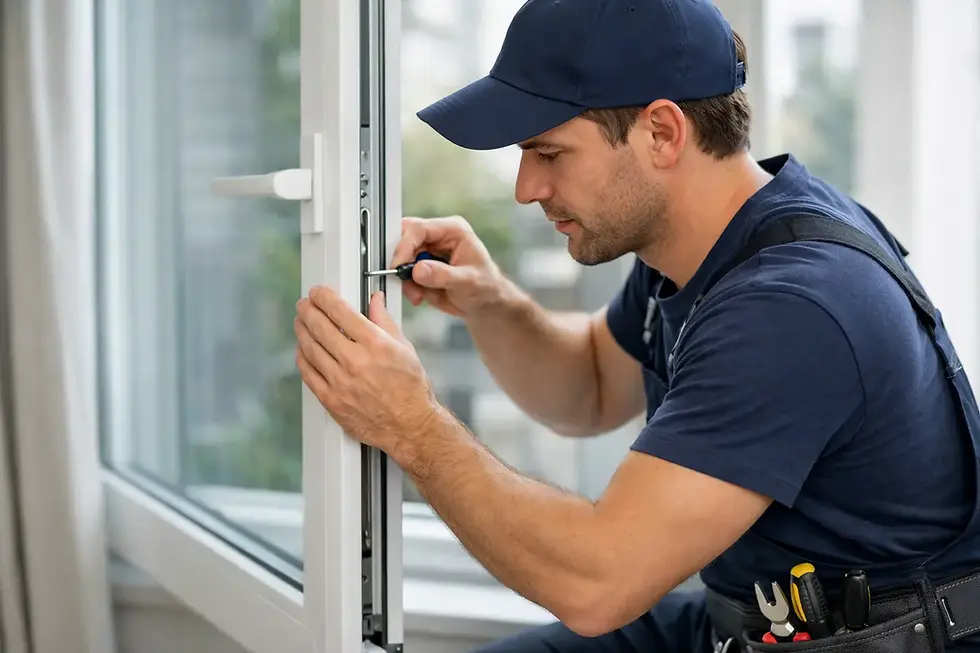
A window that sticks, requires force to close, or refuses to lock properly is more than just an annoyance. When homeowners search for how to fix a window that doesn't close properly, they usually want to restore a tight seal, eliminate drafts, and avoid paying for a complete replacement if it isn't necessary.
In many cases, the problem comes from an adjustment issue, a worn component, or a lack of maintenance—not from the entire window itself.
Before reaching for the tools, it's important to understand what is actually happening. A window that closes poorly may appear to be beyond repair when the solution is sometimes relatively simple. On the other hand, forcing a window without knowing the cause can worsen hardware wear, damage the frame, or break the operating mechanism.
How to Fix a Window That Doesn't Close Properly Without Replacing It
The first useful step is to identify the exact symptom.
Does the sash rub against the frame? Does the handle spin without engaging? Does the lock no longer align? Does the window close but still allow air to pass through?
These details completely change the type of repair required.
On crank windows, the issue often comes from the opening mechanism, operator arms, or hinges. On sliding windows, worn rollers, dirty tracks, or an improperly aligned sash are more common causes. On single-hung or double-hung windows, weatherstripping, tracks, or excess movement in the frame may be responsible.
In other words, a window that does not close properly does not automatically mean the window needs to be replaced. This is exactly where smart repair makes the difference.
Start With a Simple Visual Inspection
Open and close the window slowly. Pay attention to where it catches or resists movement.
If the rubbing always happens in the same location, there is often an alignment issue or a warped component. If the closing action feels loose or inaccurate, the hardware may be worn.
Also inspect the condition of the frame and sash. In Quebec, temperature changes, humidity, and freeze-thaw cycles eventually affect building materials. Vinyl can shift slightly, wood can swell, and mounting screws can lose their adjustment over time.
Another common sign is condensation, localized frost, or drafts near the window. In this case, the window may technically close, but the weatherstripping is not compressing properly. The problem is therefore not only mechanical—it also affects sealing and comfort.
The Most Common Causes of a Window That Doesn't Close Properly
Dirt and debris buildup are more common causes than many homeowners realize.
On sliding windows, a dirty track alone can prevent smooth operation. On casement windows, small particles in contact areas can prevent the window from closing completely.
Worn hardware is another frequent cause. A slipping crank handle, bent operator arm, weakened hinge, or misaligned lock can change the position of the sash. As a result, the window no longer sits properly within the frame.
Sagging should also be considered. Over time, some window sashes can drop slightly. It may not seem significant, but even a few millimetres can create rubbing, prevent locking, or accelerate wear on components.
Finally, there are the seals. Crushed, brittle, or missing weatherstripping can make it appear as though a window is not closing properly. The window closes, but it no longer seals as it should.
What You Can Check Yourself
A thorough cleaning is a good first step.
Remove dust, small debris, and any visible buildup from tracks, corners, and contact areas. Then test the window again. When the issue is minor, this simple maintenance step can noticeably improve operation.
Next, inspect visible screws on the hardware. A loose screw on a handle, hinge, or operator can create movement and play. However, avoid over-tightening without checking the overall alignment, as this may move the problem rather than solve it.
If the window has a crank mechanism, observe how the arm moves when opening and closing. If the arm struggles, bends, or no longer pulls the sash into position correctly, the mechanism may need adjustment or replacement.
For sliding windows, gently lift the panel. If it moves excessively or appears poorly supported, the rollers may be worn out.
The important distinction is between maintenance and technical repair. Cleaning, checking, and observing are good steps. Taking apart specialized hardware without experience can create more problems.
Repair or Replace the Components? This Is Often the Key Decision
In many cases, the long-term solution involves replacing one specific component.
A worn crank handle, defective operator, tired hinge, or misaligned lock costs far less than installing a new window. This is often the most logical choice when the glass and overall structure are still in good condition.
The same applies to weatherstripping. When seals lose their flexibility, a window may close but fail to create a proper seal. Replacing the weatherstripping restores better compression, improves airtightness, and reduces air infiltration.
There are limits, however. If the frame is severely warped, there is recurring water infiltration, or several major components are failing at the same time, repair may no longer be the most economical option.
Every situation is different. The goal is not to repair at any cost, but to choose the most practical and long-lasting solution.
When a Window That Doesn't Close Properly Hides Another Problem
Sometimes poor closing is only a symptom.
A home that shifts slightly over time, localized settling, moisture problems, or an older installation with alignment issues can all affect how windows operate.
If a window worked properly for years and suddenly becomes difficult to close from one season to the next, it is worth looking beyond the window itself.
It is also possible for a failed insulated glass unit to exist at the same time. It is not the direct cause of difficult operation, but when a window has multiple issues—fog between the panes, worn hardware, and poor sealing—a more complete restoration may make more sense than a small isolated repair.
This is often what separates a temporary fix from a repair that actually solves the problem.
How to Repair a Window That Doesn't Close Properly for Long-Term Results
A durable repair depends on three things:
The correct diagnosis
Adjusting or replacing the right components
Complete testing of sealing and operation after the repair
Repairing only the symptom is rarely enough.
For example, replacing a handle while the sash remains misaligned will cause the new part to wear out quickly. Adjusting the frame without replacing damaged weatherstripping may improve closing, but comfort problems will remain.
This is why homeowners often benefit from having the entire window evaluated. A targeted repair costs less than a complete replacement while extending the useful life of existing components.
It is the most practical approach for avoiding unnecessary expenses and preserving parts that can still provide many years of service.
Signs It's Time to Call a Specialist
Professional help is recommended if:
The window requires excessive force to open or close
The crank handle spins without engaging
The lock no longer reaches its proper position
You clearly feel drafts even when the window is closed
The replacement part is no longer a standard component
The window shows several problems at the same time
A specialist can determine whether the issue comes from the hardware, sash, weatherstripping, or alignment.
They can also quickly determine whether restoration is realistic or whether the window is truly nearing the end of its useful life.
For many homeowners, this is where the savings happen. You avoid replacing a repairable window while also avoiding endless attempts that never provide a lasting solution.
This is the approach followed by MMC Doors & Windows: repair when it makes sense and replace only when necessary. Discover our window repair service.
Preventing the Problem From Returning
A window that closes properly today can begin sticking again if maintenance is neglected.
Regular cleaning of tracks, checking weatherstripping, and paying attention to early signs of rubbing can prevent hardware from becoming damaged.
It is also best to avoid forcing a window closed during winter when components may feel stiff. If something is sticking, there is usually a reason. Applying more force rarely solves the problem and often breaks the component under the most stress.
Maintaining your windows is about protecting your home's comfort. A properly closing window keeps heat where it belongs, reduces air leaks, and prevents a small issue from becoming a much larger repair.
If your window doesn't close properly, don't automatically assume it needs to be replaced. Often, the smartest solution is also the simplest: identify the real cause, repair the correct component, and restore the window to proper working condition.


Comments