How Does an Insulated Glass Unit Work?
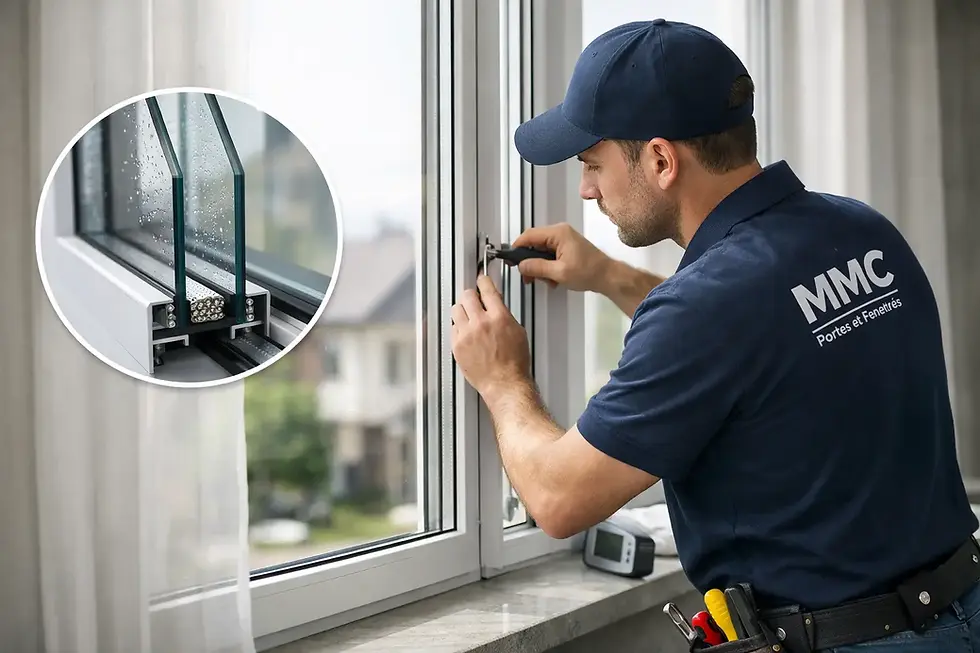
A window can look perfectly intact while still allowing cold to build up near the glass, creating condensation, or increasing heating costs. To understand what is happening, it helps to know how an insulated glass unit works. This component, also known as insulated glazing or a sealed glass unit, plays a central role in home comfort.
When an insulated glass unit loses its seal, it does not necessarily mean the entire window needs to be replaced. In many cases, the frame is still in good condition and only the insulated glass unit needs to be changed. This targeted repair can restore insulation, provide a clear view, and keep the window functioning properly without unnecessary major work.
What Is an Insulated Glass Unit?
In everyday Quebec terminology, a thermos refers to the sealed glass unit installed in a window, glazed entry door, or patio door. It is not simply a single pane of glass. It is an assembly designed to slow heat transfer between the inside and outside of the home.
An insulated glass unit is generally made of two panes separated by a sealed space. Some higher-performance models use three panes. The space contains dry air or an insulating gas, often argon. Around the perimeter, a spacer and sealing system help prevent moisture from entering the unit.
The principle is simple: the air or gas trapped between the panes slows the transfer of heat. During winter, more of the heat produced inside the home stays indoors. During summer, the glazing helps limit some of the outside heat entering the house.
The Components That Make a Difference
The performance of insulated glass does not depend only on the number of panes. The quality of the seal, the width of the space between the panes, the type of gas, and any coatings applied to the glass also matter.
Some insulated glass units have a low-emissivity coating, commonly called Low-E glass. This very thin layer helps reflect some heat back toward its source. It can improve comfort near windows, especially during colder periods, without significantly reducing natural light.
How Does Insulated Glass Help Insulate a Home?
Heat moves in several ways: through materials, through moving air, and through radiation. A single pane provides relatively little resistance to these processes. Insulated glass helps reduce heat transfer in several ways.
First, two panes create a more effective barrier than one. Second, the sealed space between them limits air movement. Because the air inside this cavity barely circulates, it transfers less heat. When argon is used, the insulating effect improves further because argon transfers heat less readily than ordinary air.
This does not mean a window surface will feel completely warm in winter or cool in summer. Glass generally remains less insulating than a properly insulated wall. However, a well-functioning insulated glass unit can significantly reduce the sensation of a cold surface, perceived drafts near the window, and unnecessary heat loss.
In summer, performance also depends on the orientation of the window, direct sunlight, and the type of glazing. A large opening exposed to full sun can still warm up a room. Insulated glass helps, but it does not replace proper solar control or good sealing around the frame and weatherstripping.
Why Does an Insulated Glass Unit Fog Up Between the Panes?
Fogging between the panes is one of the most common signs of a failed insulated glass unit. It happens when the perimeter seals are no longer completely airtight. Outside moisture can then enter the sealed space and condense as temperatures change.
At first, the problem may be subtle: a light haze during cold weather, sometimes with small whitish marks. Over time, the condensation becomes more noticeable and can leave permanent deposits on the interior surfaces of the glass. Since these surfaces are inaccessible, normal household cleaning cannot restore lasting clarity.
It is important to distinguish this from condensation on the interior surface of the window. If moisture forms on the room side of the glass, the insulated glass unit is not necessarily the problem. High indoor humidity, insufficient ventilation, or a large difference between indoor and outdoor temperatures may be responsible. If the fog is truly trapped between the panes, the insulated glass seal has failed.
Signs That an Insulated Glass Unit Should Be Checked
A failing insulated glass unit does not always show obvious fogging. A cold feeling near the window, unusually cold glass, a persistent haze, or visible marks between the panes should all be investigated. In some cases, the frame may still look perfectly fine even though the glazing performance has declined after years of exposure to temperature changes, sunlight, and humidity.
Interior condensation may also deserve attention, especially if it occurs frequently. It can indicate a ventilation or humidity problem in the home, but it can also point to weak sealing around the window. A proper diagnosis helps avoid treating the wrong issue.
An inspection can determine whether the problem comes from the insulated glass, the weatherstripping, the opening mechanism, the caulking, or the frame. These components work together. Even high-performance glass cannot perform properly if air is freely entering around the sash.
Can an Insulated Glass Unit Be Repaired?
When an insulated glass unit has failed or become fogged, the lasting solution is usually to replace the sealed unit itself. The existing frame can remain in place as long as it is sound and functional. This approach is often more economical and more responsible than replacing components that are still in good condition.
Replacing an insulated glass unit requires precise measurements. The glass thickness, spacer type, decorative grille configuration if applicable, colour, and glass type must all match the existing window. An incorrectly measured or poorly fitted unit can affect sealing, sash operation, and overall appearance.
The right solution depends on the condition of the window. When the frame, mechanisms, and seals are still in good condition, insulated glass replacement is often the most practical repair. If other components such as hardware or weatherstripping are also worn, targeted upgrades can improve the final result and extend the life of the opening even further.
What Affects the Lifespan of Insulated Glass?
There is no single lifespan that applies to every insulated glass unit. Sun exposure, freeze-thaw cycles, the quality of the original product, building movement, and the condition of the frame all influence how quickly the seals age.
Windows that are highly exposed to weather or direct sunlight may experience more stress. This does not mean that an insulated glass unit should automatically be replaced after a certain number of years. Its actual condition is more important than age alone.
To help preserve window performance, keep drainage channels clear, inspect weatherstripping regularly, and avoid forcing a sash that sticks. These simple steps will not repair a failed insulated glass unit, but they can help reduce wear around the window and make it easier to identify problems before they become more serious.
A Targeted Repair to Restore Comfort and Clarity
A fogged insulated glass unit is not only a cosmetic issue. It can reduce natural light, affect visibility, and signal a loss of energy performance. Having the window evaluated helps determine whether replacing the glass alone is sufficient, which is often the case when the structure remains solid.
For homeowners on Montreal’s North Shore, MMC Portes et Fenêtres follows a repair-first approach: correct the defective component, preserve what still works, and avoid unnecessary expenses. Clear, properly sealed, well-fitted glass can immediately improve the comfort of a room while restoring value to a window that still has many years of useful life ahead. Discover our door and window repair services.
Need Help?
Is your insulated glass fogged, unusually cold to the touch, or showing marks between the panes?
At MMC Portes et Fenêtres, we assess the condition of the glass, frame, weatherstripping, and operating mechanisms to identify the true cause of the problem. When the window structure is still in good condition, replacing the insulated glass unit can often restore clarity, improve insulation, and extend the life of the window without replacing the entire unit.
Contact us today for a free estimate.


Comments