Foggy Insulated Glass or a Cold Window: Should You Repair or Replace It?

A cold room near a window in winter, persistent condensation between the panes, or a heating bill that rises for no obvious reason: these signs often point to glass that is no longer providing the same level of insulation. However, a poorly insulated window does not automatically need to be completely replaced. In many cases, the problem is limited to the insulated glass unit or its sealing components.
For homeowners, the distinction is important. Repairing the right component can restore comfort, reduce heat loss, and avoid a much greater expense than necessary. The key is to understand what affects the performance of the glass and have the actual condition of the window assessed before making a decision.
What Is an Insulated Glass Unit?
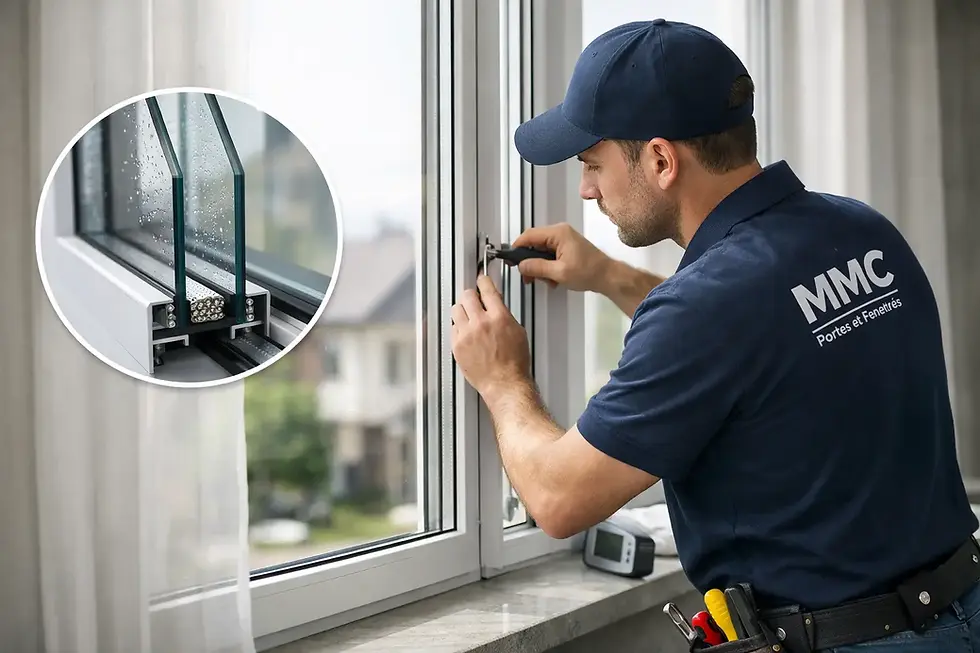
An insulated glass unit is designed to reduce heat transfer between the interior and exterior of a home. In residential windows, it generally consists of two panes of glass, sometimes three, separated by a sealed space. This space may contain air or an insulating gas, while a discreet coating on the glass can help reflect some of the heat.
Its purpose is not limited to keeping heat inside the home during the colder months. High-performance insulated glass also improves comfort near windows, reduces the sensation of a cold glass surface, and can help limit condensation on the interior pane. During the summer, certain types of glass can also help reduce some of the heat gained from sunlight.
Performance, however, depends on the entire window assembly. A good insulated glass unit cannot compensate for a warped frame, worn weatherstripping, or hardware that prevents the window from closing properly. Conversely, a window with a solid structure can often regain much of its efficiency through targeted replacement of the insulated glass unit and improvements to its weather sealing.
Signs of a Failed Insulated Glass Unit
The most obvious sign is fogging between the two panes. It may be subtle at first and become more noticeable during cold or humid weather. When the moisture is trapped inside the sealed unit, it is not condensation that can simply be wiped away: the perimeter seal has failed. Moisture has entered the insulating space, and the glass unit is no longer performing as intended.
A whitish film, mineral streaks, or a cloudy appearance between the panes indicate the same type of problem. These marks can reduce natural light and affect the appearance of the home, but the main concern is functional. Once the seal has been compromised, the insulating performance of the unit decreases.
Other signs are less obvious. You may feel cold air near the window, notice that the bottom of the glass feels extremely cold, or frequently see condensation on the interior surface of the glass. This last situation does not always mean that the insulated glass unit has failed. High indoor humidity, poor air circulation, or tightly closed curtains can also contribute to condensation. This is why a proper diagnosis can prevent replacing a component that is not actually causing the problem.
Why Does an Insulated Glass Unit Lose Its Efficiency?
The glass unit is sealed around its perimeter. Over the years, temperature fluctuations, exposure to sunlight, and normal movement of the window frame put stress on this seal. When it fails, the insulating gas, if present, can gradually escape while outside moisture can enter the unit.
Age is not the only possible cause. A sash that does not close properly, worn hardware, or compressed weatherstripping can create air leaks around the window. In this situation, the glass itself may still be in good condition even though comfort has decreased. It is important to distinguish a failed insulated glass seal from a problem involving the window’s closing mechanism, weatherstripping, or caulking.
Patio doors deserve particular attention. Their large glass surfaces and everyday use put additional stress on rollers, locks, and seals. A patio door that is difficult to operate may no longer apply enough pressure against the weatherstripping when closed. The glass is therefore only one part of the equation.
Replace the Glass or Repair the Components?
A smart repair starts with a simple question: what is actually worn or damaged? If there is fogging between the panes, replacing the insulated glass unit is generally the appropriate solution. If the existing frame is sound and stable, it can remain in place. This corrects the loss of performance without unnecessarily replacing the rest of the window.
If the glass is clear but you feel cold air, replacing or adjusting the weatherstripping, hardware, or sash may be enough. A handle, locking mechanism, or hinge that no longer works properly can have a significant effect on the window’s seal. These repairs are often faster and more economical than homeowners might expect.
Sometimes several repairs are necessary. For example, replacing a failed insulated glass unit while leaving hardened weatherstripping in place may not provide the desired result. An on-site assessment can determine which combination of repairs will provide the greatest improvement in comfort for the available budget.
How to Choose a Replacement Insulated Glass Unit
Not all insulated glass units have the same characteristics. The right choice should take into account the orientation of the home, sun exposure, the size of the glass, and the type of window. A large south-facing window has different requirements than a small north-facing window that receives little direct sunlight.
A low-emissivity coating can help retain indoor heat while still allowing plenty of natural light into the home. Depending on the product, it may also reduce some solar heat gain. There is a balance to consider: limiting summer overheating is useful in a very sunny room, but you do not want to unnecessarily darken a space that already receives little natural light.
The thickness of the glass unit must also be compatible with the existing frame. An improperly sized unit can interfere with the operation of the sash or compromise the seal. Precision is especially important with patio doors and openings that have non-standard dimensions.
Simple Steps to Protect Your Comfort
A high-performing glass unit will last longer when combined with simple, regular maintenance. Check the weatherstripping every year. It should remain flexible, continuous, and properly positioned. Clean tracks and mechanisms so windows and patio doors can close without resistance. If a sash rubs, closes unevenly, or requires unusual pressure, it is better to have it adjusted before the wear becomes more severe.
Avoid assuming too quickly that condensation on the interior glass means there is a problem with the insulated glass unit. Ventilate humid rooms, use the appropriate exhaust fans, and maintain reasonable airflow around windows. If condensation remains frequent despite these measures, an inspection can help identify the cause.
For homeowners on the North Shore of Montreal, in Laval, or in Montreal, a targeted repair can often give windows and patio doors that are still in good condition a second life. At MMC Portes et Fenêtres, the approach is to examine the glass, weather sealing, and operating components before recommending the appropriate repairs.
When a window lets in cold air or the glass loses its clarity, the best solution is not always the most drastic one. Repairing the defective component at the right time protects your comfort, your budget, and the service life of your windows.
Need Help?
Is your insulated glass unit foggy, is a window letting in cold air, or are you unsure whether the problem is caused by the glass, weatherstripping, or hardware?
MMC Portes et Fenêtres can assess the situation and determine the most appropriate repair. Replacing an insulated glass unit or performing targeted repairs to other components can often improve comfort and weather sealing while preserving a window that is still in good condition.
Learn more about our insulated glass replacement service or request an estimate.


Comments