Why Do Patio Door Rollers Wear Out?
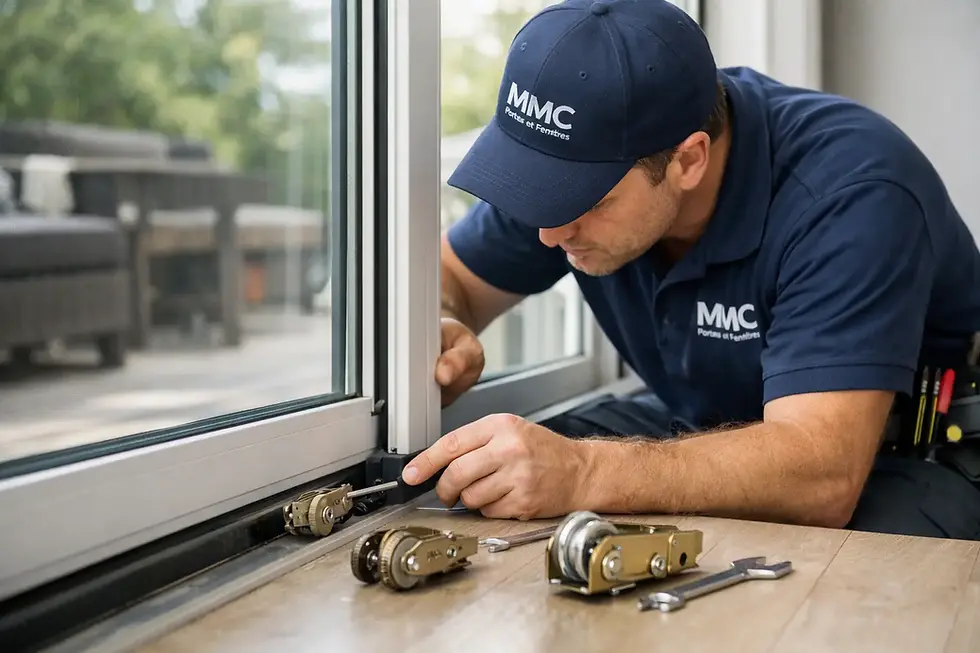
A patio door that sticks, requires effort to open, or makes a squeaking or grinding noise does not necessarily need to be replaced. Understanding why rollers wear out can help you take action at the right time, before the panel becomes difficult to operate or causes further damage to the track. In many cases, a targeted repair can restore smooth operation, improve everyday comfort, and avoid an unnecessary expense.
Rollers are small components, but they support a significant load. They carry the weight of the glass panel, guide its movement, and compensate for slight irregularities in the track. Over the years, regular use, moisture, and accumulated dirt naturally cause them to wear out. The good news is that their condition can be assessed and corrected without having to replace the entire patio door.
Why Do Patio Door Rollers Wear Out?
Roller wear generally does not have a single cause. It is often a combination of the panel's weight, the condition of the track, and maintenance that accelerates the problem. A patio door used several times a day will not wear in the same way as one that is rarely opened, especially when exposed to the temperature fluctuations typical of Quebec.
The Weight of the Panel and Normal Wear
Glass panels are heavy. Each time the door is opened, this weight is supported by the rollers at the bottom. Over time, the bearings can develop play, and the wheels can flatten, crack, or stop turning freely. Older models may also be equipped with components whose materials have simply reached the end of their useful life.
This normal wear occurs gradually. At first, you may notice slight resistance. Eventually, the door may require more force to move, begin to rub, or appear to sag on one side. Waiting until the panel becomes completely stuck can also damage the track and make the repair more complicated.
A Dirty, Damaged, or Obstructed Track
The track acts like the road on which the patio door travels. If it is filled with dust, sand, pet hair, small stones, or other debris, the rollers move over an abrasive surface. They then have to work harder every time the door is opened or closed, causing them to wear much faster.
A bent or scratched track can have the same effect. The roller repeatedly hits a particular spot, which can cause uneven wear or create a point where the door consistently catches. Cleaning the track is helpful, but it may not be enough when the rollers are already damaged or the track has suffered significant wear.
Improper Panel Adjustment
The rollers on many patio doors are adjustable. This makes it possible to adjust the height of the panel so that it remains straight, stable, and properly aligned with the frame. When the panel sits too low, it may rub against the track or another part of the frame. When it is uneven, one roller may support more weight than the other.
This imbalance causes the components to wear unevenly. It can also make it seem as though the handle or locking mechanism is defective when the actual source of the problem is at the bottom of the door. A precise adjustment can sometimes correct the way the door slides. However, if the wheels are already flattened, seized, or broken, an adjustment alone will not provide a lasting solution.
Moisture, Freezing, and Temperature Changes
Moisture entering the track, condensation, or water accumulating after rainfall can affect metal components. Some bearings may rust, seize, or lose their ability to turn smoothly. During winter, standing water can freeze and temporarily increase resistance when opening or closing the door.
Temperature changes also cause materials to expand and contract. The frame, panel, and hardware components react differently to heat and cold. A door that slides properly during summer may become more difficult to operate during colder weather. This does not automatically mean the rollers need to be replaced, but an inspection can distinguish between a seasonal issue and a component that is genuinely worn.
Signs That Your Patio Door Rollers Are Worn
A defective roller is not always visible without removing the panel. However, several symptoms are easy to recognize during everyday use. A door that no longer slides smoothly, makes a rubbing or grinding noise, or requires excessive force should be inspected.
You may also notice that the panel appears tilted, rubs against the bottom of the frame, or no longer aligns easily with the locking mechanism. A metallic knocking sound, a jolting sensation when opening the door, or resistance that consistently occurs at the same point along the track can also indicate roller wear.
Avoid forcing a patio door that is stuck. Doing so can damage the track, deform hardware components, or make an alignment problem worse. A door that has to be lifted in order to slide is also not operating normally.
Should You Repair, Adjust, or Replace the Rollers?
It depends on the actual condition of the components. If the rollers still turn properly and the panel simply sits too low, an adjustment may be enough. If the track is dirty, thorough cleaning and removal of debris can immediately improve movement. This is also useful preventive maintenance.
However, a cracked, flattened, rusted, or seized roller generally needs to be replaced. The repair involves safely removing the panel, accessing the mechanisms at the bottom, installing compatible rollers, and properly adjusting the assembly. Compatibility is important: the dimensions, height, and type of mechanism must match the existing patio door.
The track should also be inspected. If worn rollers have left deep marks, replacing the rollers without addressing the track may produce an incomplete result. Conversely, a track with only minor wear does not necessarily prevent an effective repair. This is precisely the value of a proper diagnosis: replacing only the components that need attention rather than undertaking more expensive work unnecessarily.
At MMC Portes et Fenêtres, the approach is to evaluate the patio door as a whole: rollers, track, panel adjustment, hardware, and weatherproofing. This makes it possible to provide a lasting solution rather than simply masking a symptom temporarily. Learn more about our patio door repair services.
How to Slow Down Roller Wear
Simple maintenance can help extend the life of the mechanisms. Vacuum the track regularly, then remove debris trapped in the corners with a dry cloth or small brush. Avoid greasy products that attract dust and eventually create an abrasive buildup in the track.
Also check that the drainage holes are not blocked. Water should be able to drain from the track rather than collect beneath the panel. If you notice unusual resistance, address it early. A minor alignment correction or roller replacement while the components are still accessible often costs less than repairing damage caused by months of rubbing.
How the door is used also matters. Open and close the panel without slamming it, and avoid forcing it sideways when it encounters an obstruction. These actions may seem minor, but they reduce the pressure placed on the rollers and their supports.
When Should You Request a Professional Assessment?
A professional assessment is recommended when the door is very heavy, the panel is difficult to remove from its track, the track is visibly damaged, or the locking mechanism still does not operate properly after an adjustment. Removing a glass panel requires care, both to prevent injury and to protect the frame and existing components.
For homeowners on Montreal's North Shore, in Laval, or surrounding areas, repairing a patio door that no longer slides properly is often a simple and cost-effective decision. New rollers, a clean track, and proper adjustment can transform the way the door operates from the very first opening. It is better to correct the problem while it involves a specific component than to allow continued wear to lead to more extensive repairs.
Need Help?
Is your patio door difficult to open, sticking, or making noise? MMC Portes et Fenêtres can assess the condition of the rollers, track, and panel adjustment to determine the appropriate repair.
Request a free estimate.


Comments