How to Clean Patio Door Tracks
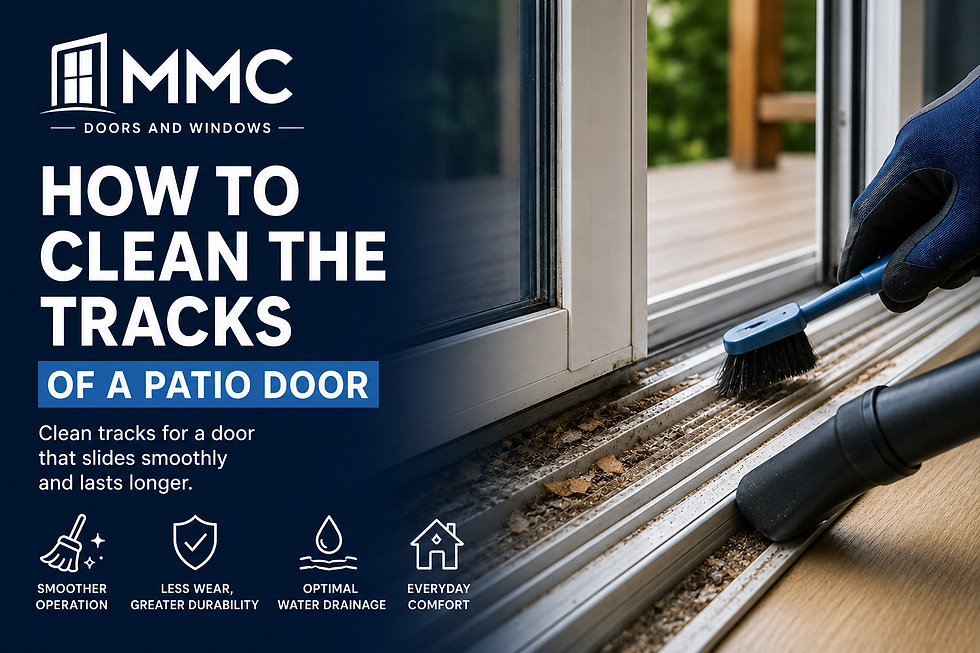
A patio door that sticks, squeaks or requires unusual effort to slide does not necessarily need to be replaced. Very often, the problem starts at the bottom of the frame, where dust, sand, pet hair, leaves and debris accumulate in the track. Knowing how to properly clean patio door tracks can help restore smoother operation, reduce wear on the rollers and prevent a simple maintenance issue from turning into a more expensive repair.
In Quebec, seasonal changes do not make things any easier. Sand and road salt tracked in from outside, along with rainwater, dust and moisture, can form an abrasive buildup in the track. This debris can act like sandpaper beneath the door. Regular cleaning is therefore a simple, practical and cost-effective maintenance step.
Why Dirty Tracks Make a Patio Door Harder to Slide
The track guides the movement of the door, while the rollers underneath the panel support much of its weight. When debris accumulates at the bottom of the track, the rollers can no longer move properly. They may bounce, drag or become stuck in certain areas. The door can then feel unusually heavy even when the hardware is still in good condition.
Forcing a patio door in this condition can make the problem worse. The rollers may wear out more quickly, the track can become damaged and the panel may move out of alignment. A door that no longer closes properly can also allow cold air, moisture or noise to enter.
Cleaning the track will not solve every problem, but it is always a sensible first step before considering a technical repair.
How to Clean Patio Door Tracks Effectively
Start by opening the door as far as possible so you can access the section of track normally hidden beneath the panel. Look carefully at the corners, grooves and small drainage openings. These are the areas where debris tends to accumulate most easily.
Begin by vacuuming the track with a narrow attachment. The goal is to remove dry debris such as dust, grains of sand, hair, small stones and insects. This step is more important than it may seem. If you wet the track before removing the sand, you can create a muddy residue that is more difficult to remove.
Next, use an old toothbrush, a small stiff brush or a paintbrush to loosen debris stuck in the grooves. A slightly damp cloth with warm water and a small amount of mild soap is usually enough to finish the job.
Wipe the track with a second clean, dry cloth. There should be no standing water left at the bottom of the frame.
For stubborn dirt, including dark or greasy marks, you can use a mild, non-abrasive cleaner suitable for painted or aluminum surfaces. Avoid scouring powders, wire brushes and highly corrosive products. They can damage the finish, scratch the track and make it easier for dirt to accumulate in the future.
Check the Drainage Holes
Many patio doors have small openings designed to drain water toward the exterior. If they become blocked, water may remain in the track after rainfall or when snow melts. This moisture carries dirt, can freeze during winter and may accelerate the deterioration of certain components.
Carefully clear these openings using a small flexible plastic tool or a fine brush. Avoid using sharp or metal objects if you cannot clearly see the passage, as you could damage an internal component or dislodge a seal.
After cleaning, pour a small amount of water into the track and check that it drains normally toward the exterior.
Should You Lubricate the Track After Cleaning?
Not automatically.
A common mistake is to spray thick oil or a greasy lubricant over the entire track as soon as the door becomes difficult to slide. These products attract dust and sand. The door may seem easier to move at first, but a few weeks later, the mixture of grease and debris can make the friction even worse.
If the track is clean and the rollers still appear to be functioning properly, a dry silicone-based lubricant may be appropriate in small quantities and according to the manufacturer's recommendations. Apply it only where needed rather than saturating the entire track. Wipe away any excess before sliding the door back and forth several times.
However, lubricant cannot restore worn rollers, repair a damaged track or correct a poorly adjusted door. Sometimes it simply masks the real problem temporarily.
If the resistance quickly returns after cleaning, it is better to have the hardware inspected rather than continuing to apply additional products.
What to Avoid When Cleaning a Patio Door Track
A patio door is heavy, and its proper operation depends on the entire system: rollers, track, frame, weatherstripping, lock and adjustments. Overly aggressive maintenance can create unnecessary problems.
Avoid lifting the panel with a pry bar to access the track unless you are familiar with the mechanism. Do not randomly remove or turn the roller adjustment screws, and never force the door when it becomes stuck.
A panel that comes off its track can be difficult to reposition and may damage the frame or glass.
Also avoid spraying a powerful stream of water directly into the track. This can push water and debris into areas where they should not go. A damp cloth and careful cleaning are more effective than heavily rinsing the track.
When Cleaning Is No Longer Enough
After cleaning the tracks, gently slide the door through its full range of movement. If it moves evenly and locks without effort, you have probably solved the main problem.
However, pay attention if the door continues to rub on one side, visibly sags, makes a metallic noise or requires force to close.
These signs often indicate worn rollers, a need for adjustment, a damaged track or hardware that is reaching the end of its useful life.
The problem can also be related to the weatherstripping. A patio door may feel as though it is sticking because the seal has shifted, hardened or is incorrectly positioned. In these situations, cleaning the track is still useful, but it is no longer the complete solution.
A targeted repair often costs less and creates less waste than a much more extensive intervention. Replacing the rollers, adjusting the panel, correcting the track or replacing the weatherstripping can significantly extend the useful life of an existing patio door.
This is particularly worthwhile when the frame and glass are still in good condition.
How Often Should You Clean a Patio Door Track?
For a typical home, two thorough cleanings per year are a good starting point: once in the spring, after the winter sand and thawing season, and again in the fall before winter.
If the patio door opens onto a frequently used deck, garden, yard with pets or a particularly dusty area, light monthly maintenance can make a noticeable difference.
This does not need to become another complicated household chore. Quickly vacuuming the track and wiping it with a cloth when you clean the glass can often prevent significant buildup.
The key is to take action before the door becomes difficult to move.
For homeowners in Montreal, Laval, the North Shore of Montreal, Terrebonne, Repentigny and surrounding areas, if cleaning is no longer enough, MMC Portes et Fenêtres recommends assessing whether the door can be repaired before considering unnecessary replacement.
A properly maintained patio door should slide smoothly. If yours no longer does, a targeted repair may restore everyday comfort while helping protect your investment.
Need Help?
Is your patio door still difficult to open even after thoroughly cleaning the tracks? The problem may be related to the rollers, panel adjustment, track, hardware or weatherstripping.
MMC Portes et Fenêtres can inspect the mechanism to identify the cause and determine whether a targeted repair can restore smooth operation.
Before considering replacing your patio door, have it checked to see what can be repaired.


Comments