Front Door Repair Assessment: What Should Be Checked?
Updated: Aug 9

A draft around the threshold, a door that rubs against the frame, a loose handle, or a lock that takes several attempts to latch are often problems homeowners simply learn to live with. However, these issues should not be ignored. They can reduce comfort, increase heat loss, and accelerate the wear of components that could still be repaired without the expense of replacing the entire door.
Before considering a major replacement, it's important to identify the true cause of the problem. A front door is made up of several components that work together: the door panel, frame, threshold, weatherstripping, hinges, lock, handle, and strike plate. A single defective part can make it seem like the entire door has reached the end of its life, when in reality a targeted repair is often all that's needed.
Why Have Your Front Door Evaluated?
A door that doesn't close properly isn't necessarily warped. In many cases, the hinges have simply sagged under the weight of the door panel. In other situations, the weatherstripping has become flattened, torn, or hardened after years of harsh Canadian winters. The problem may also be related to the threshold, frame alignment, or worn hardware.
A professional assessment helps distinguish between a simple adjustment and a more serious issue. This prevents replacing parts that are still in good condition and helps prioritize repairs that will truly improve weather sealing, security, and ease of use.
It's also a matter of budget. Repairing a specific component is usually far less expensive than replacing the entire door. That doesn't mean every door can be repaired. A severely damaged structure, a frame weakened by rot, or a permanently warped door panel may require a different solution. The important thing is to evaluate the door's actual condition rather than judging it by appearance alone.
Signs That Your Front Door Needs a Repair Assessment
Feeling cold air around the entrance is one of the most common warning signs. It may be accompanied by condensation, water marks near the bottom of the frame, or dust entering through the seals. These symptoms often point to a loss of weather sealing, especially around the weatherstripping and threshold.
A door that's difficult to open or close should also be inspected. If it rubs against the frame, requires excessive force, or the latch no longer aligns with the strike plate, the hinges, alignment, or adjustment may be the cause. Forcing the door every day can damage the hardware and make repairs more expensive later.
You should also pay attention to a loose handle, a sticking lock, or a key that's difficult to turn. These issues affect more than convenience—they can compromise the security of your home's main entrance.
Visible signs also matter: peeling paint near the bottom of the door, cracked seals, flattened weatherstripping, hinge screws pulling out, or visible gaps between the door and frame all provide valuable clues about the condition of the door.
What a Technician Checks During the Inspection
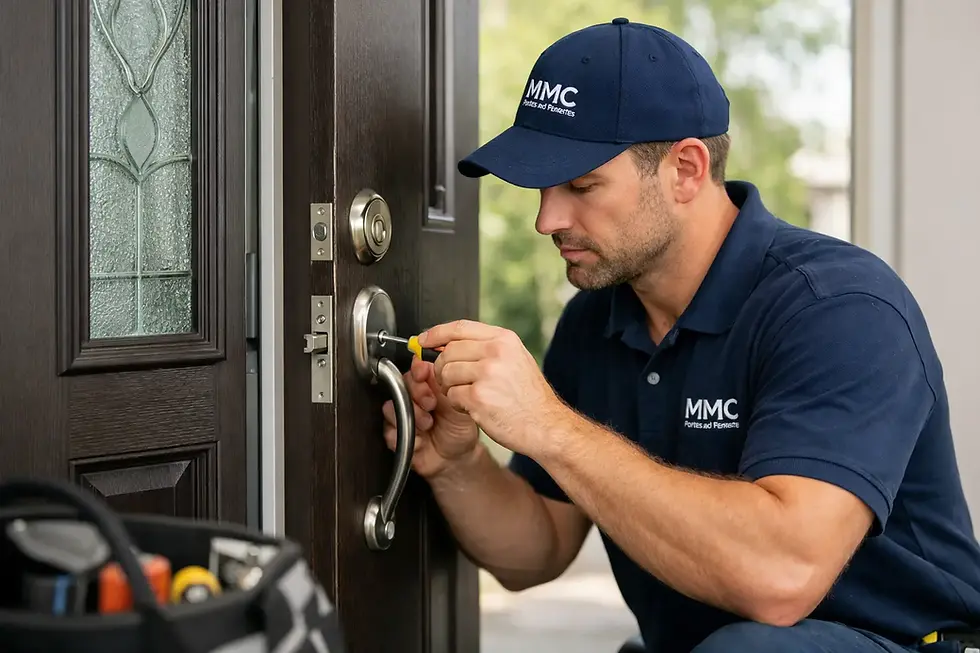
A proper evaluation involves much more than looking at the door while it's closed. The technician observes how it moves, checks its alignment, and inspects areas where air or water may enter. The goal is to identify the root cause rather than simply treating the symptom.
The door panel is inspected for warping, moisture damage, or structural weakness. The frame and threshold are then examined for movement, gaps, and visible damage. The condition of the hinges is also important, since loose or worn hinges can affect the position of the entire door.
The hardware is another key part of the inspection. The lock, latch, strike plate, and handles should operate smoothly without excessive play or friction. Sometimes a precise adjustment is enough to restore reliable operation. If a component is excessively worn, targeted replacement may be recommended.
Weather sealing completes the inspection. The weatherstripping must fit tightly around the door without preventing it from closing properly. The threshold should minimize air infiltration while still allowing water to drain naturally. This is especially important for homes exposed to wind, snow, and frequent temperature fluctuations.
Repair or More Extensive Work? A Decision Based on Facts
Repair is often the right solution when the door panel and frame remain solid but certain components have lost their effectiveness. Replacing the weatherstripping, adjusting the hinges, correcting the threshold, or replacing worn hardware can quickly improve comfort and everyday usability.
This approach extends the life of existing components and reduces unnecessary waste. It's especially beneficial for homeowners who want to maintain their property without spending more than necessary on a localized problem.
However, there are situations where repair alone is no longer practical. Repeated water infiltration that has damaged the wood, an unstable frame, or severe warping should be taken seriously. An honest professional will clearly explain the limitations of the proposed repair. The right decision isn't automatically the least expensive one in the short term—it's the one that permanently solves the underlying problem.
How to Prepare for the Assessment
You don't need to disassemble anything before the appointment. However, it's helpful to note how long the problem has been present and under what conditions it becomes most noticeable. For example, a draft may only occur during extremely cold weather, driving rain, or spring snowmelt.
Mention any previous repairs, replaced parts, or changes you've noticed. If the door only rubs during certain seasons, that detail may help identify movement in the frame or building. Photos of water stains or frost—if they're no longer visible during the inspection—can also be useful.
Keep the area around the door clear so the technician can fully open, close, and inspect the threshold without obstruction. The goal is simple: provide the conditions for a thorough inspection and an accurate recommendation rather than a rough estimate.
Common Mistakes That Make Door Problems Worse
Adding adhesive weatherstripping without identifying the real problem may seem like a quick fix, but the wrong type of weatherstripping can prevent the door from closing properly or hide an alignment issue. Likewise, overtightening screws in weakened material doesn't always solve sagging hinges.
It's also tempting to lubricate a sticking lock and assume the problem is fixed. Lubrication can help in some cases, but it won't correct a misaligned strike plate, a worn latch, or a defective handle. Temporary fixes have their place—as long as they don't delay the repair that's actually needed.
The biggest mistake is ignoring an air or water leak. A small draft may first affect comfort, then lead to condensation and moisture around the frame. Addressing the problem early helps protect the surrounding components and keeps repairs simpler.
Repairs Designed for Our Climate
On Montreal's North Shore, in Laval, and surrounding areas, front doors are exposed to harsh winters, repeated freeze-thaw cycles, and significant humidity changes. Proper weather sealing and alignment are not just cosmetic details—they directly affect your home's comfort.
At MMC Doors & Windows, we believe in smart repairs that begin with a thorough evaluation of every component. Our goal is to recommend the most effective, long-lasting solution based on the actual condition of your door, with a free estimate and guaranteed workmanship. Discover our door repair service.
A front door that closes properly, seals tightly, and locks effortlessly makes a real difference in everyday life. Having the first signs of wear inspected early can often extend the life of your existing door while preventing small issues from becoming much larger and more expensive problems.
Need Help?
Is your front door letting in drafts, difficult to close, or is the lock no longer working properly?
At MMC Doors & Windows, we'll carefully inspect your front door to identify the exact cause of the problem and recommend the most effective and cost-efficient repair. Whenever possible, we prioritize adjusting the door, replacing the weatherstripping, repairing the hardware, or correcting the hinges before recommending the replacement of the entire door.
Contact us today for a free estimate.


Comments