5 Common Exterior Door Problems

A door that rubs against the floor, lets in a cold draft, or becomes difficult to close is more than just an inconvenience. Certain exterior door problems can increase heat loss and accelerate wear on components that can often be repaired. In Quebec, freeze-thaw cycles and significant temperature fluctuations put considerable stress on exterior doors.
Before considering an expensive replacement, it’s important to identify the actual source of the problem. In many cases, adjusting the door, correcting its alignment, or replacing the weatherstripping is enough to improve its airtightness and operation.
5 Common Exterior Door Problems to Watch For
Problems aren’t always obvious at first glance. A door may appear to be in good condition while still allowing cold air to enter around its edges or being slightly misaligned. The earlier the problem is addressed, the simpler and more targeted the repair can often be.
1. Drafts Around the Door
Do you feel cold air near the handle, along the bottom of the door, or around the frame? The weatherstripping is often the culprit. Over time, it can harden, become compressed, peel away, or lose its ability to properly seal around the door.
The door sweep may also be worn or improperly adjusted. This problem becomes especially noticeable during winter, when the floor near the entrance feels cold and your heating system seems to work harder. Installing the appropriate weatherstripping and making precise adjustments can often improve the seal without requiring major work.
2. A Door That Rubs, Sticks, or Doesn’t Close Properly
A door that catches on the threshold, requires extra effort to close, or no longer stays properly in position should be inspected. The problem may be caused by the hinges, loose screws, a sagging door panel, or misalignment that has developed over the years.
Forcing the door is never a good solution. It can worsen the misalignment, put unnecessary stress on the hinges, and make the door increasingly difficult to close.
A professional adjustment can often realign the components so the door closes more easily and operates properly again.
3. A Door That Is Difficult to Lock
When the latch bolt no longer lines up properly with the strike plate, the problem isn’t necessarily the lock itself. A misaligned door, sagging door panel, or shifting hinges can prevent the locking mechanism from engaging properly.
If you have to lift, pull, or push the door in order to lock it, its alignment should be checked. Adjusting the door can sometimes restore normal operation without having to work on the lock itself.
If the problem comes directly from the locking mechanism, a locksmith is the appropriate professional to contact.
4. Signs of Water, Condensation, or Moisture
Dark marks near the bottom of the door, peeling paint, a stained threshold, or moisture around the entrance are signs that shouldn’t be ignored.
Moisture near a door can sometimes be related to defective weatherstripping, improper adjustment, or an airtightness issue. However, it can also come from the threshold, frame, exterior caulking, or another problem that extends beyond the door itself. Identifying the source before beginning a repair is therefore important.
It’s also important to distinguish water infiltration from condensation. Condensation generally occurs when warm, humid indoor air comes into contact with a cold surface. Water infiltration, on the other hand, may appear after rain, melting snow, or periods of strong winds.
Correctly identifying the source of the problem helps determine whether work on the door can actually resolve it.
5. Fogged Insulated Glass in the Door
If your door has an insulated glass unit and you notice fog, whitish marks, or droplets appearing between the panes, the seal of the insulated glass unit has likely failed. This isn’t dirt that can be cleaned from the inside or outside.
Condensation between insulated glass panes reduces visibility, affects the appearance of the entrance, and decreases the insulating performance of the glass unit.
When the door and its frame are still in good condition, replacing only the defective insulated glass unit can often preserve the existing door while correcting the problem at its source.
How to Check the Condition of Your Door Without Taking It Apart
A quick seasonal inspection can help identify problems before they become more serious. Ideally, inspect your door in the fall and again after winter.
Open and close the door several times without forcing it. It should move freely and close without unusual effort.
On a cold or windy day, run your hand along the perimeter of the door. Check the condition of the weatherstripping: it should be continuous, flexible, and securely attached. Also inspect the threshold and hinges. Protruding screws, rust, or friction marks can provide useful clues.
From inside your home, look for light coming through around the edges of the door, particularly early in the morning or in the evening. Even a thin line of light may indicate a gap that is also allowing air to pass through.
You can also perform a simple test using a sheet of paper. Place it between the door and the weatherstripping and close the door. If the paper slides out very easily, the seal may be insufficient in that area.
Repair or Replace: What Really Makes the Difference?
The right choice depends on the overall condition of the door and the nature of the problem. A door that rubs because of poor alignment, lets in air because of compressed weatherstripping, or has a failed insulated glass unit can often be repaired effectively.
However, if the door or its frame has significant water damage, the structure is unstable, or the damage is extensive, a targeted repair may not solve the underlying problem.
That’s why a proper diagnosis is preferable to a one-size-fits-all solution. The goal isn’t to replace a door that could still provide many years of service, nor is it to hide a more significant problem with a simple adjustment.
A targeted repair focuses on the component actually responsible for the problem. This approach can reduce unnecessary expenses, avoid replacing components that are still functional, and limit the extent of the work required.
It is particularly worthwhile when you are still satisfied with the overall appearance of your door and the problem is primarily functional.
Repairs That Can Extend the Life of an Exterior Door
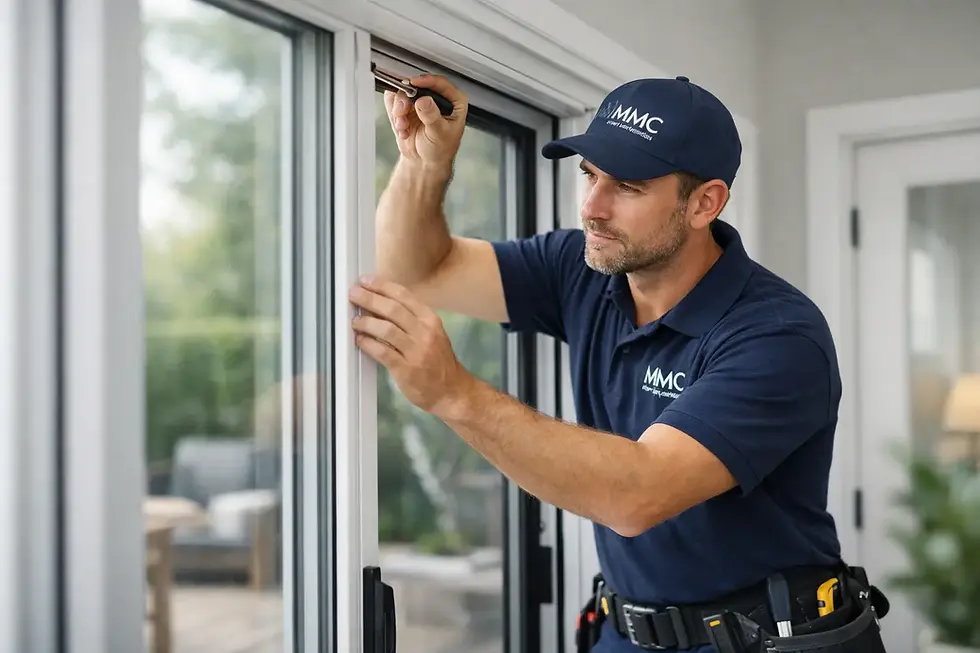
Depending on the diagnosis, the work may include adjusting the hinges and door panel, correcting the door’s alignment, replacing the weatherstripping, or making certain adjustments necessary for proper operation. A defective insulated glass unit can also be replaced when the door allows for it.
These repairs need to be performed precisely. For example, installing thicker weatherstripping to compensate for poor alignment can actually make the door more difficult to close. Likewise, addressing only a symptom without correcting the cause of the misalignment may allow the problem to return.
The different components of a door work together. That’s why a targeted repair always begins by identifying the true source of the problem.
A proper diagnosis helps avoid replacing components that still work and allows the repair to focus on where it will provide the best result.
When to Request a Professional Evaluation
It may be time to have your door evaluated if it becomes difficult to open or close, drafts persist, the weatherstripping is visibly deteriorated, the door appears misaligned, or an insulated glass unit has condensation between the panes.
For homeowners in Montreal, Laval, Terrebonne, and the North Shore, a targeted evaluation can help determine whether a door adjustment, alignment correction, weatherstripping replacement, or insulated glass replacement is the most appropriate solution.
At MMC Portes et Fenêtres, our approach is simple: repair what can be repaired and address the true cause of the problem rather than replacing unnecessarily.
A properly adjusted exterior door should almost go unnoticed: it closes easily, limits drafts, and remains reliable day after day. As soon as it starts requiring extra effort or letting in cold air, repairing it at the right time can help extend its useful life.
Need Help With Your Exterior Door?
Does your door rub, close poorly, let in cold air, or have fogged insulated glass? The problem doesn’t always require replacing the entire door.
MMC Portes et Fenêtres can assess the situation and determine whether a door adjustment, weatherstripping replacement, or insulated glass replacement can correct the problem.
We serve Montreal, Laval, Terrebonne, and the North Shore of Montreal, Repentigny and its surroundings.
Request your free estimate and find out whether a targeted repair can help extend the life of your door.


Comments